Verified against official sources
Layout rules were checked against an open TPU PDF and official GOST registry pages.
This page combines verified TPU, TUSUR, and GOST references with examples from the uploaded TPU DOCX template.
Layout rules were checked against an open TPU PDF and official GOST registry pages.
Section examples and style notes were extracted from the provided TPU template.
Use this guide as a baseline, then align the final file with your faculty or supervisor requirements.
Direct links to the files you can open and compare with the generated template.
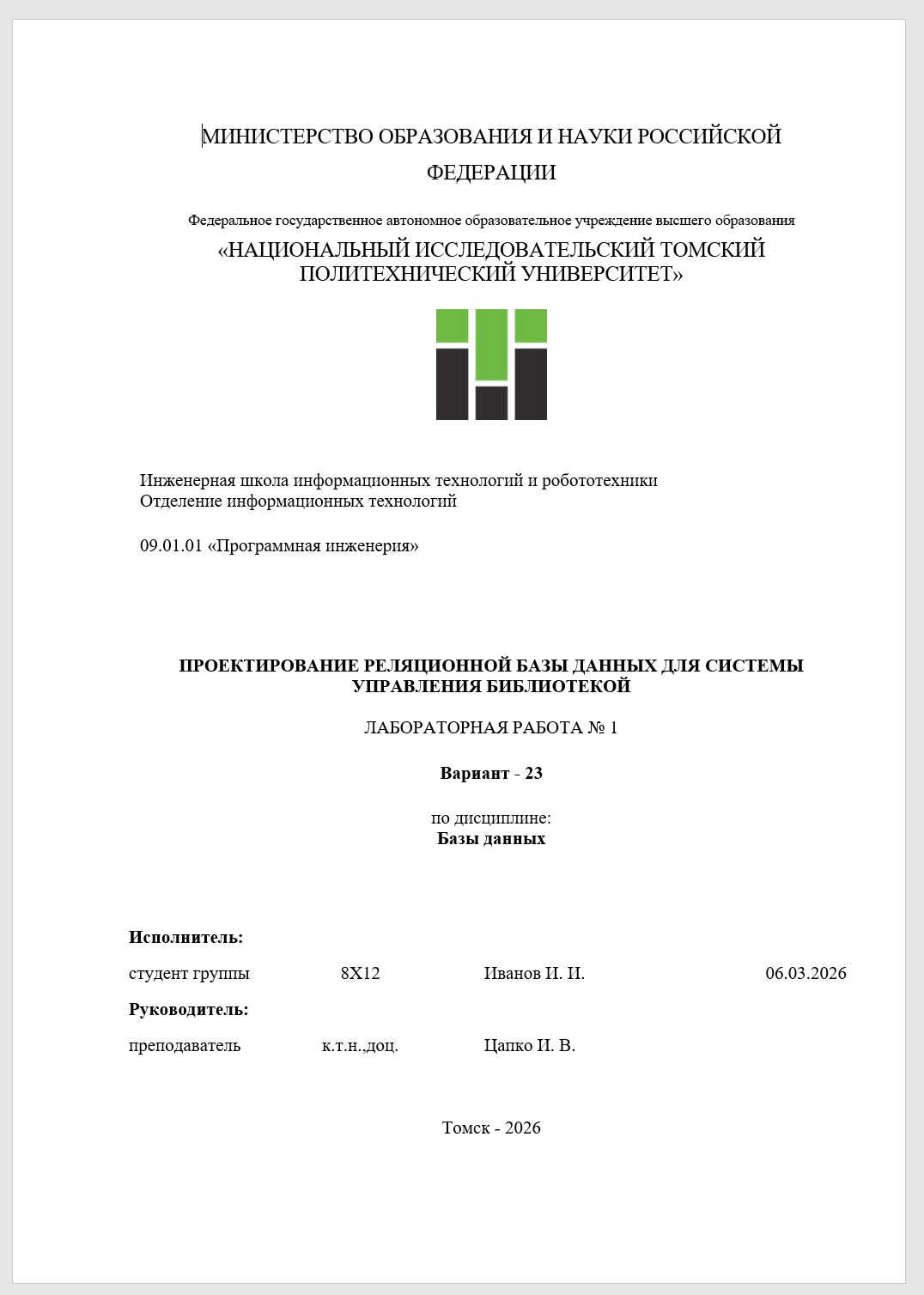
The uploaded TPU report template with title page, section hierarchy, and Word styles.
Archived edition; the generator profile is based on the 2011 standard.
Earlier laboratory guide; use OS TUSUR 01-2021 or 02-2021 for current profile rules.
TPU and TUSUR materials converge on a stable core: title page, task or purpose, main body, conclusion, and references. The uploaded TPU template additionally shows abstract, definitions, abbreviations, introduction, and appendices.
A compact lab report usually includes the title page, purpose or task, theoretical basis, execution steps, results, conclusion, and references.
OS TUSUR 01/02-2021 makes the introduction, main text and conclusion mandatory. Assignment, abstract, contents and terminology depend on the type of work and the assignment; the 2011 guide is supplementary.
For larger works, the uploaded TPU template and TPU qualification-work materials show a broader structure with abstract, definitions, introduction, main body, conclusion, references, and appendices.
TPU STO 2.5.01-2011 recommends Times New Roman 14 pt (Arial 12 pt is also allowed), A4, line spacing 1.5, justified text, and a first-line indent of 1.5–1.7 cm. The generator uses Times New Roman 14 pt and 1.5 cm. TUSUR uses Times New Roman 14 pt, spacing 1.5 and a 1.25 cm indent; margins are 30/15/20/20 mm (left/right/top/bottom).
The same TPU PDF sets minimum margins of 30 mm on the left, 10 mm on the right, and 20 mm on the top and bottom. The uploaded DOCX template uses approximately 30 / 15 / 20 / 20 mm.
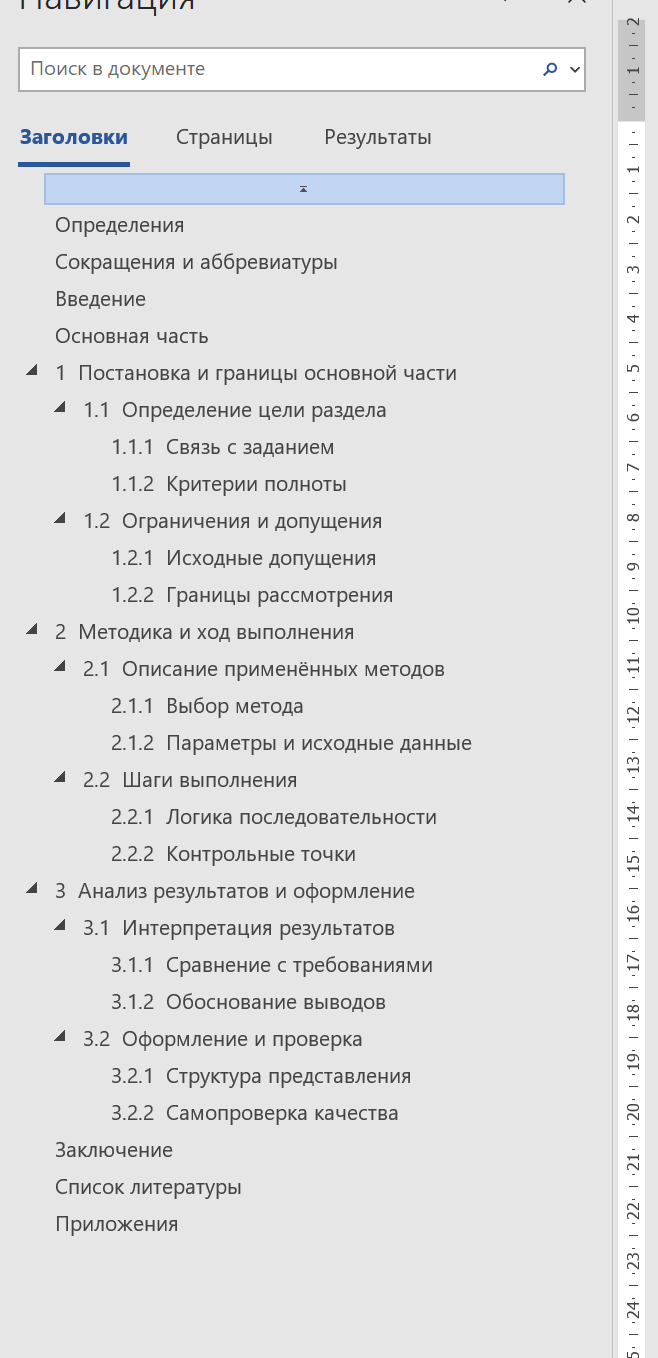
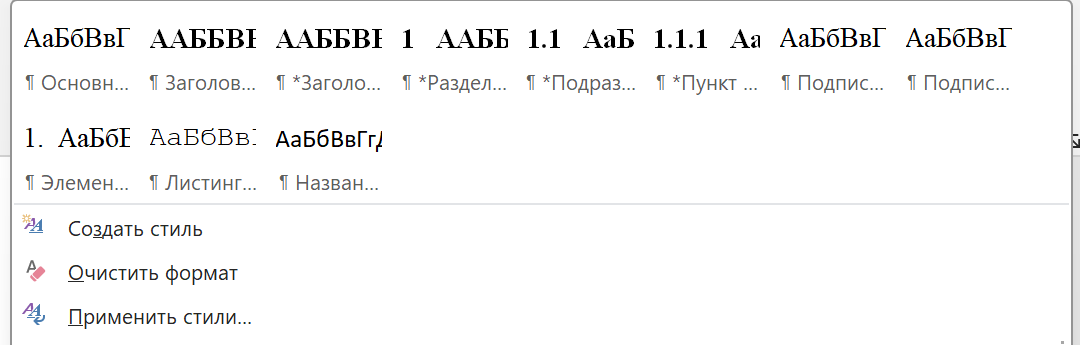
The uploaded template uses 1 / 1.1 / 1.1.1 numbering. Its starred heading styles carry Word outline levels 0–2, which is why those headings appear in navigation and in the contents.
For the references list itself, GOST R 7.0.100-2018 is a safer anchor. GOST R 7.0.5-2008 governs bibliographic references and citations in the text or notes.
The uploaded template treats the task section as a near-verbatim restatement of what the teacher assigned: the overall goal, major steps, and constraints.
Overall goal; key stages; important constraints and report requirements.
The template describes the abstract as a compact summary of the document volume, purpose, methods, results, significance, and keywords.
The abstract usually fits within one page and ends with 5–15 keywords.
Definitions and abbreviations are separated. Abbreviations are written one per line in the “term — full name” pattern.
API — application programming interface
DBMS — database management system
The template demonstrates a nested heading structure and already contains sample lines for the references list.
1 Scope and boundaries
1.1 Section purpose
1.1.1 Relation to the task
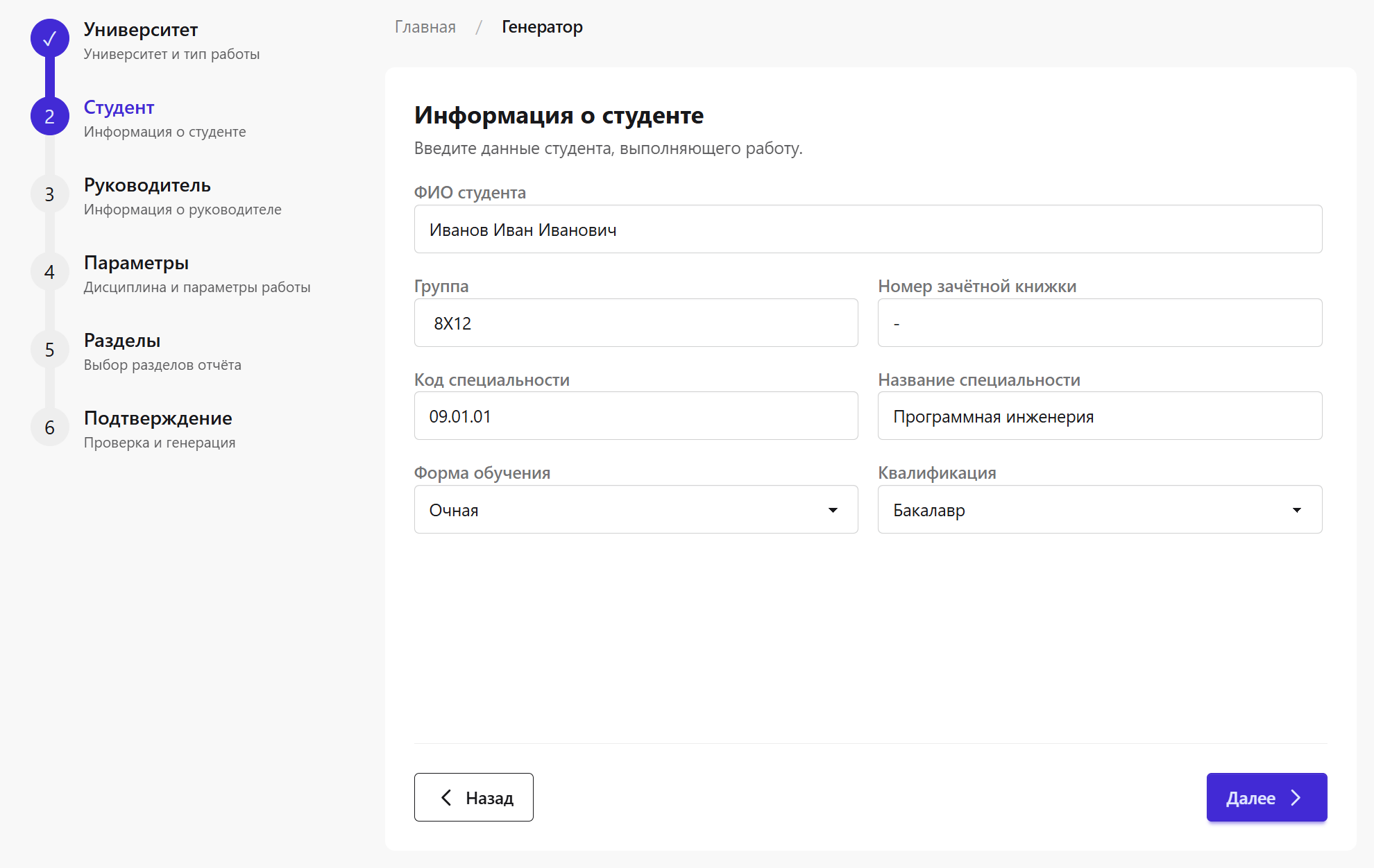
Available work types depend on the selected university and on the current API catalog. The project UI and metadata explicitly mention TPU and TUSUR.
The current auto-import logic is tied to public TPU portal pages (`portal.tpu.ru`). Positions and degrees should always be checked manually.
Before submission, verify the title page, numbering, table and figure captions, and the final references list.
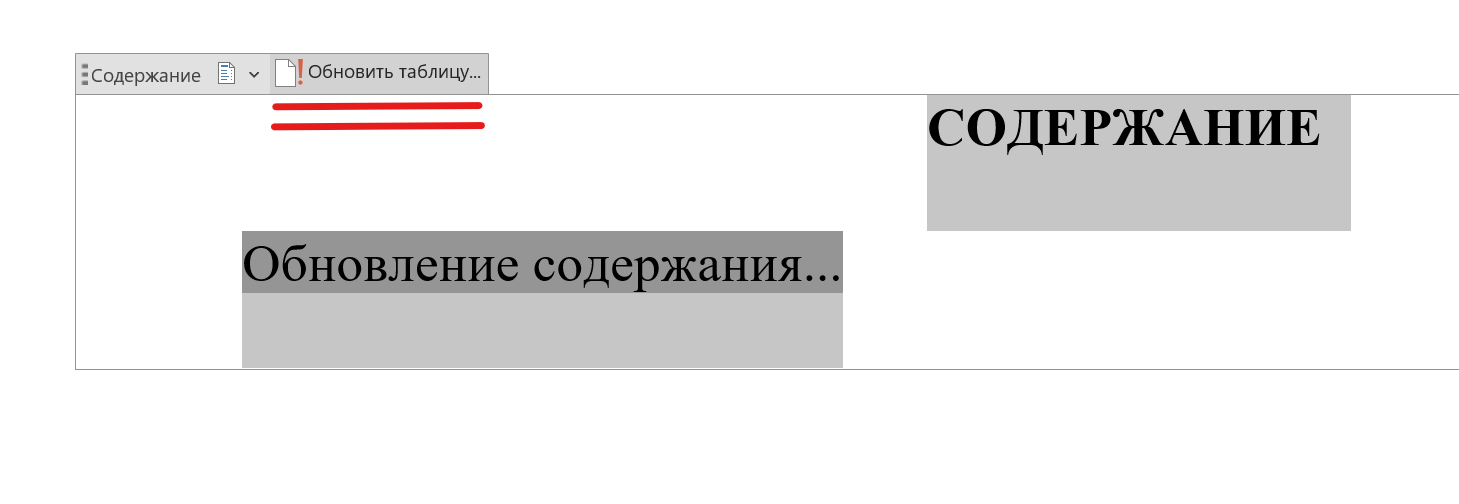
After the template is generated, the table of contents placeholders remain unbuilt. Open the DOCX in Word, click inside the contents block, and update the table so Word recalculates headings and page numbers.
Official TUSUR standard; check the discipline-specific assignment.
Official humanities standard. Course projects are outside this profile.
Official TPU standard for qualification works, projects, and coursework.
Structure and presentation of research reports.
Bibliographic references and citations.
Bibliographic description for the references list.
Methodical guide for laboratory reports.
Law-department guide for jurisprudence diploma and coursework papers (2013).
No. The generator creates only a document template: section structure, title page, and Word styles. It does not know the actual content of your specific laboratory work, calculations, results, conclusions, or source list, so those parts must be filled in and checked manually.
In the uploaded TPU template, starred styles have Word outline levels. That is why they appear in navigation and in the automatic table of contents.
For the references list itself, GOST R 7.0.100-2018 is the safer baseline. GOST R 7.0.5-2008 is for references and citations inside the text.
Correct it manually. The current auto-import relies on public TPU portal pages, and those pages can change over time.